
Living in South Carolina, we are all accustomed to the humidity and the heavy feeling that surrounds us each time we step outside. It is a staple to the weather conditions here in the South. Humidity can have surprisingly harmful effects on your home and your health when it starts to invade your living space.
We're often unaware of this excess moisture buildup in our homes and don't realize what's happening until we experience the uncomfortable, sticky feeling that accompanies high humidity indoors. Humidity can cause damage to your home, lessen the effectiveness of your heating, ventilation and air conditioning (HVAC) unit and even contribute to harmful health effects. Staying on top of the problem and controlling moisture buildup can make a huge difference in the integrity of your home and the quality of your health.
Many of us don't notice humidity until it becomes a bigger problem. Our skin gets clammy, and the air seems to feel heavier. It becomes a problem when humidity follows us inside and starts to damage our homes and our health.
High indoor humidity comes with its own telltale signs and symptoms, many of which are easily identifiable. Here's what to look for when determining whether humidity has become excessive in your home:
Alone, just one of these problems might not mean that humidity is excessive in your home. However, if you are experiencing more than one of these problems, finding ways to manage the humidity and getting your home checked out by a professional is best.
Humidity can creep up on us before we even realize it's happening, especially living in South Carolina. We are already so accustomed to the high humidity levels that we don't always notice a difference in our living environment. If your home feels humid or spot any of the signs of a highly humid environment, determine the cause of the issue so that you can implement home humidity control as soon as possible.
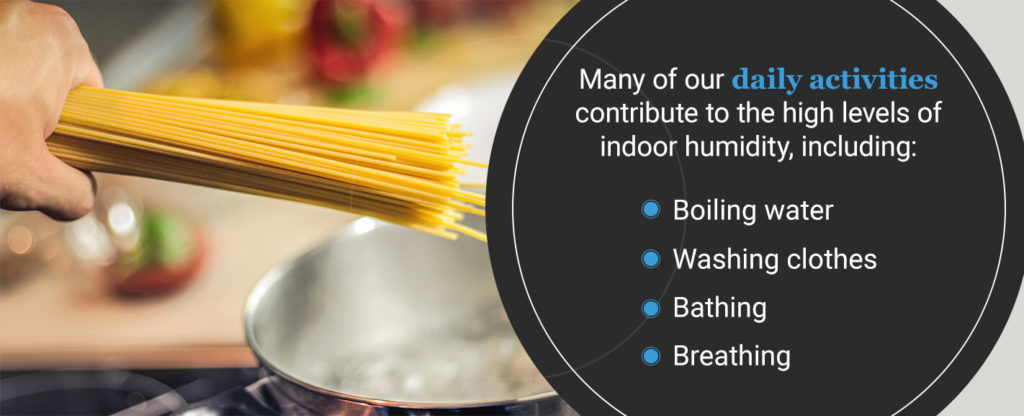
Identifying the cause can remedy the numerous issues that come with high levels of humidity in a home. Believe it or not, many of our daily activities contribute to the high levels of indoor humidity. These activities include boiling water, washing clothes, bathing and breathing, which are just a few of the main sources of humidity in the home.
There are other causes of high humidity beyond the things we do daily as human beings. This can be water leakage from pipes or faulty showerheads and drippy sink faucets. Certain construction materials can be at fault as well. Newly installed construction materials, such as wood, insulation and plaster, can release humidity if they have retained any moisture.
Damp ground conditions that invade the spaces under or around your home also contribute to the humidity you experience in your home. Certain materials, such as timber, soak up the moisture from the ground and trap it. The wood can release this moisture into your home, adding excessive humidity to the environment.
South Carolina, in particular, has higher rates of humidity than other states due to its location close to the water in a warm climate. Naturally, humidity levels are higher in a South Carolina home. The air-conditioning units we have also play a part in the level of humidity we experience. A faulty or incorrectly sized unit may turn on and off too quickly, not giving your unit enough time to circulate the humidity through its system. This traps the humidity in your house.
Identifying the cause is key to resolving the humidity issue as soon as possible. This can reduce the cost of repairs on your house and benefit your health as well. It's time to live comfortably and find ways to reduce the amount of moisture buildup in your home.
Once you've identified the cause, you can begin to take steps to manage the humidity levels in your home to prevent the condition from getting any worse. You can do small things every day to make sure that the moisture buildup doesn't get any worse.
Some tips to control home humidity include:
Getting rid of excess moisture is incredibly important to maintain a healthy home. However, it's important to have some humidity present in your home. Ideal humidity levels are anywhere between 35%-50%, so getting rid of humidity entirely shouldn't be the goal. Dry air can also cause health concerns, so keeping moisture within reasonable levels is good for our overall health.
The solution for high humidity in the home can vary, depending on what's causing it in the first place. Addressing these issues head-on allows you to improve moisture control in your house.
Here's how to lower humidity in your house using strategies in and around your home:
Using these tips, you can restore the humidity in your home to safer levels. You will feel more comfortable, and your house will suffer less damage because of it. You may also experience fewer health concerns and make your home a healthier environment, so it is best to get these issues resolved as soon as possible.
Both low and high humidity can potentially cause health concerns. Low humidity in the home comes with its own health effects, such as dry skin and hair. Dry air can also increase our susceptibility to viruses, like a cold or the flu.
High humidity can be dangerous for your health too. Here are just a few of the effects you may experience if the humidity levels in your home are too high:
Many of these symptoms occur because high levels of moisture bring mold and mildew, which are dangerous to our health. Mold produces allergens, which are substances that cause allergic reactions. These reactions can be mild but are often more severe in sensitive individuals and those with asthma. Symptoms include irritation in the eyes, nose, skin and throat.
Mold can also produce something called mycotoxins, which have more serious effects, such as poisoning, a weakened immune response and cancer. It's important to be mindful of these potential effects as the long-term damage can be harmful to your well-being.
Humidity also plays a part in our sleep cycle. When humidity levels are too high, we experience issues with non-rapid eye movement (NREM) and rapid eye movement (REM). These issues can cause a decrease in our overall health, as both NREM and REM are crucial to our sleep cycle. Our memory may worsen, and our ability to recover from illness or injury may take longer.
It is so important to pay attention to the humidity levels in your home. If you are currently experiencing any of these health issues, determine if excessive humidity is the cause.
You deserve to live in a comfortable, healthy home. High levels of humidity can cause your HVAC unit to function improperly, leading to less air circulating in your home and an overall warmer climate indoors.
If controlling home humidity has become a problem for you, we can help! E.A.C. Heating & Air is dedicated to bringing you high-quality service and can help bring your humidity levels back to healthy levels. Reach us at 843-681-3999 or use our online contact form to start addressing the high humidity in your home today.